Table of Contents
|
Pipe spool fabrication is the process of cutting, fitting, and welding sections of pipe and fittings into pre-assembled units (spools) in a controlled shop environment before they are transported and installed on-site. Shop fabrication improves quality, reduces field labor costs, and shortens installation schedules compared to building piping systems entirely in the field. |
For industrial facilities running complex piping systems, how you fabricate matters just as much as what you fabricate. Pipe spool fabrication moves the most labor-intensive work off the job site and into a controlled shop, where precision is easier to maintain, inspection is simpler, and crews are not fighting the clock under field conditions.
The result is piping that arrives ready to install, built to code, and pre-inspected. For plant managers and project engineers trying to hit tight turnaround windows, that advantage is hard to overstate.
This guide covers how pipe spool fabrication works, which codes govern it, what materials are commonly used, and what to look for when selecting a fabrication contractor. Whether you are planning a capital project, a plant expansion, or a scheduled outage, this breakdown will help you make better decisions faster.
Burkes Mechanical has provided certified pipe fabrication services across the Southeast since 1986, serving pulp and paper, chemical, petroleum, mining, and power generation facilities. Here is what experience on those jobs has taught us about doing it right.
What Is Pipe Spool Fabrication?
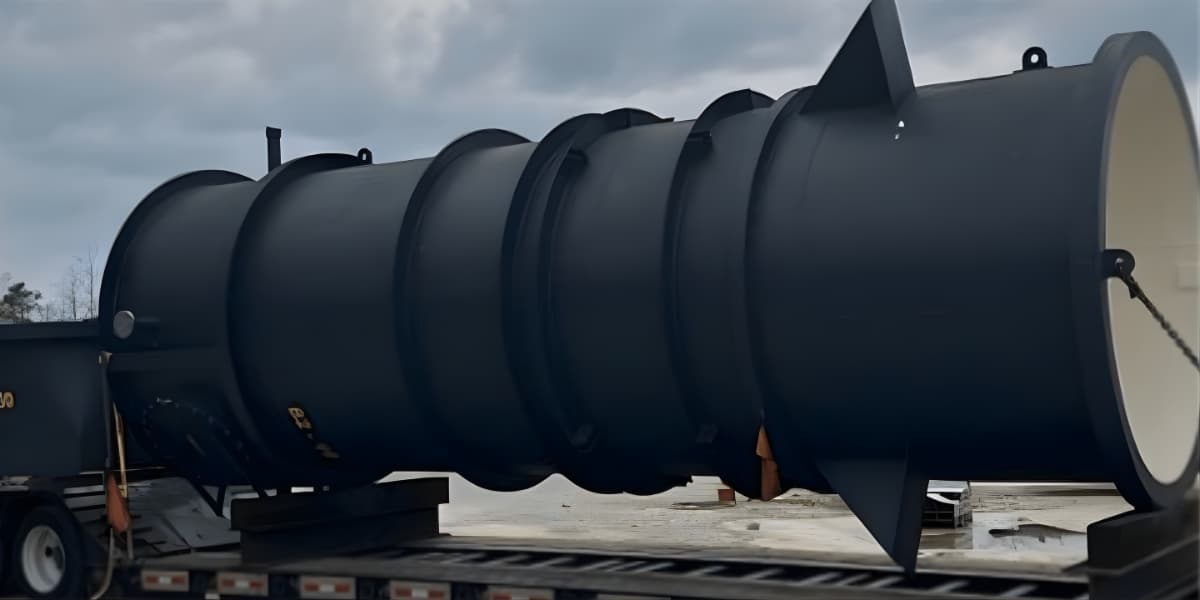
Pipe spool fabrication is the process of assembling sections of pipe, fittings, flanges, elbows, reducers, and other components into pre-built units, called spools, before they are delivered to a job site for installation.
Rather than cutting and welding pipe in the field one joint at a time, a fabrication shop receives isometric drawings (iso drawings), cuts pipe to exact dimensions, fits components together, welds them to code, and inspects the finished spools before they leave the facility.
Each spool is a discrete section of a larger piping system. When spools arrive on site, installation crews connect them to each other and to equipment nozzles using flanged or field-weld joints. The result is a faster, cleaner installation with less exposure to field conditions, tighter quality control, and fewer surprises during startup.
Pipe spools are used in:
- Process piping systems (chemical, petroleum, power)
- Utility piping (steam, air, water, nitrogen)
- High-temperature and high-pressure service lines
- Pulp and paper mill piping
- Mining and mineral processing facilities
How Does Pipe Spool Fabrication Work?
The pipe spool fabrication process follows a defined sequence from design documents to finished, inspected spools ready for delivery.
- Review iso drawings and bill of materials. The fabrication shop receives isometric drawings for each spool. These show the pipe configuration, dimensions, material specs, fitting types, flange ratings, and weld joint locations. The BOM (bill of materials) lists every component needed.
- Material procurement and traceability. Pipe, fittings, flanges, and specialty items are sourced per the specified material grade. Mill test reports (MTRs) are reviewed and retained for traceability. Material is marked and tracked through fabrication.
- Cutting and fit-up. Pipe sections are cut to length using CNC cutting systems or manual tools depending on pipe size and material. Components are fit together per the drawing, checked for squareness and alignment, and tack-welded for positioning.
- Welding. Qualified welders complete the welds using procedures qualified to the applicable code (ASME B31.1, B31.3, or other). Weld procedures (WPSs) and welder qualifications (WPQs) are maintained per code requirements.
- Non-destructive examination (NDE). Depending on the service category and code requirements, welds are inspected using visual inspection, radiographic testing (RT), ultrasonic testing (UT), liquid penetrant testing (PT), or magnetic particle testing (MT). Examination records are documented.
- Dimensional verification. Finished spools are checked against iso drawings for overall dimensions, flange orientation, and end-to-end accuracy. Dimensional tolerances must be met so spools fit properly during field installation.
- Surface prep and coating. Spools requiring coating or painting receive surface preparation (blast cleaning) and coating application per project specs. Industrial coating services protect against corrosion and service environment degradation.
- Marking, packaging, and delivery. Each spool is marked with its spool number, material identifier, and any required code stamps. Flanges are protected with covers, pipe ends are capped, and spools are staged for transport to the job site.
What Codes and Standards Govern Pipe Spool Fabrication?
ASME B31.3 and ASME B31.1 are the two most commonly applied codes for industrial pipe spool fabrication. The correct code depends on the type of service the piping is designed for.
| Code | Application |
|---|---|
| ASME B31.3 | Process piping in chemical, petroleum, pharmaceutical, and industrial plants |
| ASME B31.1 | Power piping for steam, feedwater, and other services at power-generating facilities |
| AWS D1.1 | Structural welding on supports and attachments |
| ASME Section IX | Weld procedure and welder qualification requirements |
| ASME S Stamp | Certification authorizing a fabricator to produce power piping per B31.1 |
An ASME S Stamp is particularly significant for contractors fabricating power piping. It certifies that the fabricator operates a quality control system audited and authorized by ASME, covering procedures, welder qualifications, NDE, material traceability, and documentation. Not every pipe fab shop carries this certification.
For facilities operating in regulated industries, confirming a fabrication contractor's quality certifications and standards is not optional. It is the first question.
Shop Fabrication vs. Field Fabrication: Which Is Better?
Shop fabrication is generally preferred for piping that can be dimensionally defined in advance, fits within transport constraints, and benefits from controlled shop conditions. Field fabrication is used when access, dimensions, or project phasing require it.
Here is a direct comparison:
| Factor | Shop Fabrication | Field Fabrication |
|---|---|---|
| Quality control | Easier to maintain, stable shop environment | More variable, weather and access impact work |
| Welding productivity | Higher, stable positioning, specialized equipment | Lower, awkward positions, limited equipment |
| Inspection | Simplified, staged and controlled | More complex, often concurrent with other work |
| Schedule | Parallel with site work, faster total schedule | Sequential, adds to critical path |
| Cost | Lower unit cost per weld | Higher labor cost per joint |
| Flexibility | Less flexible once fab starts | More flexible for late-scope changes |
| Material traceability | Stronger documentation chain | Harder to maintain in busy field conditions |
For most large piping systems, a hybrid approach is used: spools are fabricated in the shop and then field-welded together during installation. This balances the cost and quality advantages of shop fab with the flexibility needed for final connections to equipment.
Facilities with tight outage windows especially benefit from maximizing pre-fabrication. The more piping that arrives at the site ready to install, the less time crews spend doing fit-up and welding on the clock. For a deeper look at how this decision plays out on real projects, see our SME.
What Materials Are Used in Pipe Spool Fabrication?
The material selected for pipe spool fabrication depends on the operating temperature, pressure, fluid service, and corrosion environment of the system. The most common materials in industrial pipe fabrication are:
Carbon Steel
The most widely used material for general process and utility piping. Grades like A106 Grade B and A53 are common for moderate pressure and temperature services. Cost-effective and widely available.
Stainless Steel
Used where corrosion resistance is critical, including chemical processing, food-grade systems, and aggressive fluid services. 304 and 316 stainless are the most common grades. Stainless requires stainless-qualified welders and proper segregation in the fab shop to prevent contamination.
Alloy Steel
Chrome-moly alloys (P11, P22, P91) are used in high-temperature, high-pressure applications common in power generation and petroleum refining. These materials require preheat, post-weld heat treatment (PWHT), and specialized weld procedures.
Duplex and Super Duplex Stainless
Used in highly corrosive or chloride-rich environments. Common in offshore, chemical, and some pulp and paper applications.
Material selection should be confirmed with a qualified engineer before fabrication begins. Substituting materials without engineering review is one of the most common sources of expensive rework.
What Does Quality Control Look Like in a Pipe Fab Shop?
Quality control in a professional pipe fab shop is not a final inspection step. It runs through every stage of fabrication, from incoming material verification to final dimensional check before delivery.
As more industrial and manufacturing facilities invest in smarter systems, digital transformation in manufacturing is also changing how teams think about quality control, downtime, documentation, and operational visibility.
Following industrial safety standards and a structured QC program at every phase is what separates reliable fabrication from work that creates problems during installation and startup.
- Incoming material inspection. Every piece of pipe, fitting, and flange is verified against the purchase order, applicable ASTM/ASME material standard, and mill test report. Material that does not match the specified grade is rejected before it enters production.
- Welding qualification. All welders working on code-governed piping must hold current qualifications documented per ASME Section IX. Weld procedures (WPS and PQR) must be qualified and maintained on file. A fabricator who cannot produce welder qualifications on request is not someone you want building critical piping.
- In-process inspection. Fit-up is checked before welding begins. Weld interpass temperatures are controlled. Root passes are visually inspected on open-root welds before fill passes are added.
- Non-destructive examination (NDE). The level of NDE required depends on the fluid service category under B31.3 or the power piping requirements under B31.1. An ASME-certified shop maintains a qualified NDE program and retains examination records.
- Dimensional inspection. Finished spools are checked against iso drawings for spool length, flange orientation (bolt-hole alignment), centerline dimensions, and fit-up geometry. Tight dimensional control here prevents costly field fit-up problems.
- Documentation package. A complete documentation package for each spool should include: isometric drawings, material MTRs, weld maps, WPS/PQR references, NDE reports, dimensional reports, and coating records where applicable.
How Do You Choose the Right Pipe Spool Fabrication Contractor?
The right fabrication contractor brings certified capability, process discipline, and real capacity to your project. Here is what to verify before awarding the work:
- Certifications and code compliance. Confirm ASME S Stamp for B31.1 power piping, and confirm the contractor operates a documented quality control program for B31.3 process piping. Ask for their current certificate of authorization, not just a verbal claim.
- Welder qualifications. Ask for a copy of current welder qualifications (WPQs) and the weld procedures (WPS) applicable to your material and joint type. If they hesitate, that is a red flag.
- Shop capacity. Understand the shop's square footage, available equipment, and current backlog. A shop that is overcommitted will miss your delivery dates.
- Material traceability. Ask how the shop handles material receipt, tagging, and MTR management. Traceability is non-negotiable for critical services.
- NDE program. Confirm the shop has in-house or contracted NDE capability for the examination methods your project requires.
- Coating capability. If your spools require coating, ask whether the shop has an indoor blast and coating facility. Coating spools in inadequate conditions creates quality problems that show up after installation.
- Industry experience. A fabricator with direct experience in pulp and paper, chemical processing, or petroleum refining understands the specific demands of those environments.
Burkes Mechanical operates an 80,000+ sq. ft. fabrication facility in the Southeast with ASME certifications, a NACE Level II coating program, and certified crews serving facilities across the region. For projects ranging from single-line replacement spools to full-plant pipe packages, the same quality standards apply every time.
Our mechanical construction services also mean that the team fabricating your spools can support the installation, reducing handoffs and keeping accountability in one place.
FAQs
-
What is the difference between a pipe spool and a pipeline?
A pipe spool is a pre-assembled section of a piping system, typically fabricated in a shop, that includes fittings, flanges, and other components welded together as a single unit.
A pipeline refers to a longer, continuous run of pipe that may include many individual spools connected together during installation. Spools are the building blocks of a complete piping system.
-
What ASME code applies to pipe spool fabrication?
The applicable ASME code depends on the service. ASME B31.3 governs process piping found in chemical, petroleum, and industrial plants. ASME B31.1 governs power piping systems, such as those at power generation facilities. Both require weld procedures and welder qualifications to be maintained per ASME Section IX. For B31.1 power piping, look for a fabricator holding the ASME S Stamp.
-
How long does pipe spool fabrication take?
Lead time for pipe spool fabrication depends on the scope, material availability, the complexity of the piping system, and the current backlog of the fabrication shop. Simple carbon steel spools for a small project may be fabricated in days. Large packages involving specialty alloys, extensive NDE, and coating can take several weeks. Planning your fabrication scope early and providing final iso drawings as soon as possible shortens lead times and prevents schedule compression.
-
What is the advantage of shop fabrication over field fabrication?
Shop fabrication allows welders to work in controlled conditions with purpose-built equipment, better positioning, and no weather delays. Inspection, NDE, and coating are all easier to manage in a shop environment. The result is better weld quality, more consistent dimensions, and faster installation when spools arrive on-site. For outage and turnaround projects with tight windows, maximizing shop-fabricated spools reduces the amount of critical-path welding done in the field.
-
What documentation should come with fabricated pipe spools?
A complete fabrication package for code-governed pipe spools should include the isometric drawing, material mill test reports (MTRs), a weld map showing each joint, applicable weld procedure specifications (WPS), welder qualifications (WPQ), NDE examination records, dimensional inspection reports, and coating records where applicable. This documentation is required for code compliance, owner acceptance, and long-term facility records. If a fabrication contractor cannot provide a complete documentation package, that is a serious quality concern.
About Burkes Mechanical%20(1)-1.png?width=100&height=62&name=Logo%20-%20Burkes%20(1)%20(1)-1.png)
Founded in 1986, Burkes Mechanical is a leading industrial contractor serving facilities across the Southeast with mechanical construction, electrical and instrumentation services, fabrication, and crane support. With decades of experience and a workforce of skilled craft professionals, Burkes delivers safe, reliable solutions for complex industrial projects in industries such as pulp and paper, chemical, petroleum, mining, manufacturing, and power generation.
Our team combines technical expertise, certified craftsmanship, and a strong safety culture to execute projects with precision and accountability. Backed by ASME, API, and NBIC certifications and an industry-leading safety record, Burkes Mechanical helps plant managers and project engineers complete critical installations, maintenance, and shutdown work safely, efficiently, and on schedule.
%20(1)-1.png?width=497&height=308&name=Logo%20-%20Burkes%20(1)%20(1)-1.png)
%20(1)-1.png?width=93&height=58&name=Logo%20-%20Burkes%20(1)%20(1)-1.png)
Burkes